
Maintenance Tips to Extend the Lifespan of Your Motorcycle
Ensuring your motorcycle has a healthy and long lifespan is easy with regular maintenance and attention. Bikes require as much care as a car to maintain optimum motorcycle performance, whether the bike is used for adventuring, enjoyment or as a practical transport option.
Although bike models are less common than most cars, motorbike components are easily found and replaced online. If the bike is properly maintained, new parts won't need purchasing as frequently, and you save money. And don't forget to keep your motorcycle clean; it helps a lot more than you may think!
Keeping your motorbike running smoothly allows for stress-free rides and long motorcycle engine life. As a motorcycle owner, there are various ways to ensure your bike is ready to go at all times, from a regular wash to battery maintenance. Below we discuss the best maintenance tips to extend the lifespan of your bike and improve motorcycle performance in the long run.
REPAIR ANY ISSUE IMMEDIATELY
No one knows your bike better than you, so if you hear or feel something that's not quite right, check it out straight away. Maybe handling is loose, or a metal rattle has started; either way, there's an issue with your motorbike that should not be left to worsen. Determine if the problem is something you can DIY fix with expert help or whether it demands a professional engineer in a workshop.
If a repair is safety-critical, stop using the motorcycle until it is safe. Ask for a clear estimate separating essential repairs from work that can be planned for later.
Avoid Over-Modifying
Personalisation is hugely important within the biking community, as it can signify beliefs, tastes, and the groups each rider is associated with. But, there is a limit when modifications turn from personal identification to a destructive nuisance. Putting too much strain on the bike can weaken components and reduce the motorcycle's lifespan. If installing an upgrade or modifying the bike could affect motorcycle performance, check in with a local expert to seek professional, unbiased advice.
Break In The Motorcycle Properly
Follow the running-in instructions for the exact model, including engine-speed limits and the first service. No single running-in distance applies to every motorcycle.
Watch Acceleration
It may be fun once in a while or for special occasions, but continuous abrupt acceleration and showy engine revs can cause extensive damage to your bike's lifespan and performance. The key engine components can start to quickly wear down and need repairs more often - costing you a lot of money. Rare stunts won't be hugely problematic as long as the rider handles the motorcycle carefully most of the time.
Check Engine Oil Regularly
Check the motorbike has the correct engine oil quality and quantity before setting off on a ride, especially on longer rides. Use the grade of oil recommended by your bike manufacturer for optimal performance.
Follow the manufacturer oil-change schedule, specification and checking method. Neither a universal 2,000-mile interval nor seasonal assumptions about consumption are suitable for every bike.
Ride The Motorbike Properly
Riding the motorcycle how it was designed to be will dramatically help extend the bike's lifespan and ride quality. The best way to protect any motorcycle's engine and increase usable life is to use it properly, without unnecessary revs or manoeuvres. Over-speeding can cause the engine to overheat and become damaged. Here are some easy-to-follow tips;
Minimise sudden & hard acceleration
Minimise sudden braking
Keep within speed limits and ride to the conditions

Bike Chain Maintenance

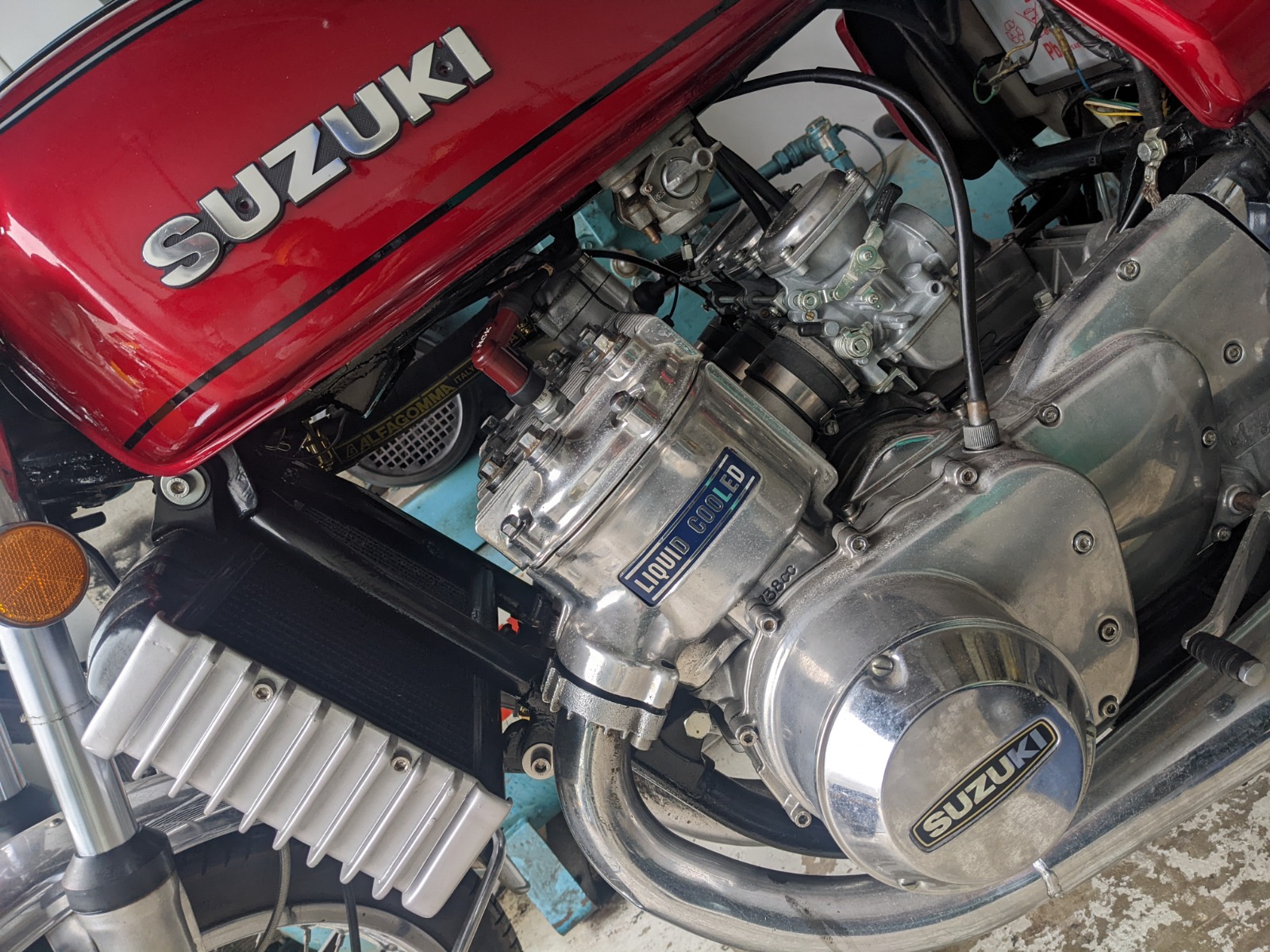
Engine Maintenance
Take Care Of The Battery
Motor batteries need recharging to maintain and supply energy to the motorcycle. Similarly to a car battery, a motorbike battery recharges as you ride, owing to the alternator fitted with a regulator. Yet, each use of the lights or brake lever takes power, so check the battery life before heading out on a ride. Depending on the type of battery installed, maintenance demanded will vary.
Some bikes have older batteries that require water inside, and levels must be checked and topped up regularly. Recent models may have modern, maintenance-free and automotive batteries, limiting worry about the motorbike running out of juice during a long ride. Also, the newer batteries reduce electrical and fluid problems. Some riders use a Trickle Charger to smart charge their motorbikes whilst in storage for more than three days. Trickle Chargers can improve battery life and protect from a dead battery over long periods.
Regular Lubrication
Follow the model-specific lubrication schedule. Some bearings are sealed and should not be greased by an owner; use the specified products and procedures for components that need maintenance.
Lube Or Grease The Chain
Clean and lubricate a chain as directed, using compatible products with the engine switched off. Follow the slack-setting method and keep excess lubricant away from tyres and brakes.
Clean Air Filter Regularly
It may seem simple, but cleaning the air filter regularly plays a huge role in maintaining peak engine performance. Without proper cleaning, the air filter can easily clog, causing impure air to enter the engine and potentially cause damage. Clogged air filters prevent the correct combination of fuel and air from forming. Check the owner's manual for information on when to change the air filters or clean them whenever returning from a dusty or dirty ride.
Use Fuel Cleaner
Use an additive only if suitable for the motorcycle and intended purpose. A cleaner is not automatically a stabiliser. Persistent running problems need diagnosis rather than repeated additive use.
Tyre Maintenance
Every motorcycle rider knows that tyre maintenance is vital for a smooth, and safe ride. What's more, proper periodic tyre care improves the bike's lifespan. Check the tyre pressure for the correct PSI (pounds per square inch), according to the owner's manual, and then check the tyre's tread depth to see if it needs replacing. If the tyre's tread is incorrect, it can lead to tyre blowouts and injury to the rider.
Look out for cracks, splits, bald spots or other damages to repair as soon as possible. Before heading out on long rides to the middle of nowhere, check tyre pressure, tread and condition. If a tyre is completely worn out, replace it, and recycle the old one at a tyre recycling depot.
Judge lifespan by condition, not a promised mileage
There is no universal mileage at which a motorcycle becomes worn out. Storage, load, corrosion, riding conditions and previous repairs affect its engine and chassis differently. Maintain the whole bike: an engine that runs well cannot compensate for unsafe brakes, steering or tyres.
Record oil consumption, recurring leaks, starting behaviour and changes in vibration. A pattern is more useful than a single reading. Discuss an increasing consumption rate or repeated fault with a specialist rather than waiting for a service reminder.
Current MOT figures show why wear items matter
For April to June 2026, suspension defects affected 1.75% of motorcycle tests and steering 1.00%. These Great Britain class 1 and 2 results highlight inspection needs; they do not predict engine life. Source: DVSA, September 2026 release.
Tyre age matters too. Michelin guidance calls for annual specialist inspections after five years of use and replacement by ten years from manufacture, even with tread remaining. Damage or wear may require replacement sooner; follow the guidance for your actual tyres.
Create a maintenance record that follows the motorcycle
Keep invoices alongside a log of date, mileage, work and fluid specifications. Record time-based tasks as well as mileage-based ones, including brakes, coolant and final drive where applicable. Check what was actually completed instead of treating a service stamp as a list of every task.
Review the record before a tour or return from storage. Keep recall completion paperwork and note modifications that may alter servicing requirements. A clear history helps the next mechanic avoid missed work and helps a buyer assess the motorcycle.
Reduce avoidable wear during everyday use
Follow the handbook for warming up and running in. Ride smoothly while the engine reaches operating temperature, avoid labouring it in an unsuitable gear and use the specified oil. Do not extend a change interval simply because the motorcycle has covered few miles.
Match cleaning and inspections to use: wet commuting and dusty riding expose different components. Protect against corrosion and follow the correct chain or shaft-drive procedure. Do not wash a disposable paper filter or grease a sealed bearing unless the manufacturer procedure calls for it.
Decide whether to repair or replace with an inspection
When several faults appear together, ask for a condition assessment and itemised estimate. Separate safety-critical repairs from cosmetic work, then compare the total with the bike condition and your plans. Replacing a wear part is different from addressing structural damage or repeated major faults.
Do not keep using an unsafe motorcycle while deciding. A realistic maintenance budget and timely diagnosis are more useful than a claim that every bike will reach a particular mileage. Contact Jap & German Motorcycles to discuss symptoms and the next inspection.
Jap & German Motorcycles provides the best services in and around West London. Whatever you require, our team can assist you with everything from BMW motorbike repairs to providing motorbike spare parts.